Residential House Extension Cost in London, 2026 Budget Guide
London extension costs in 2026 for single-storey, two-storey, and loft conversions, plus professional costs and budgeting advice from Armstrong Campbell Architects.
"How much will my extension cost?" is one of the first questions homeowners ask us and one that's hard to answer. Much comes down to the project scope and quality aspirations, which generates a wide range of estimates from £1,500/m² to £4,000/m². This journal aims to provide a detailed breakdown of costs and describe our more nuanced approach to budget estimating.
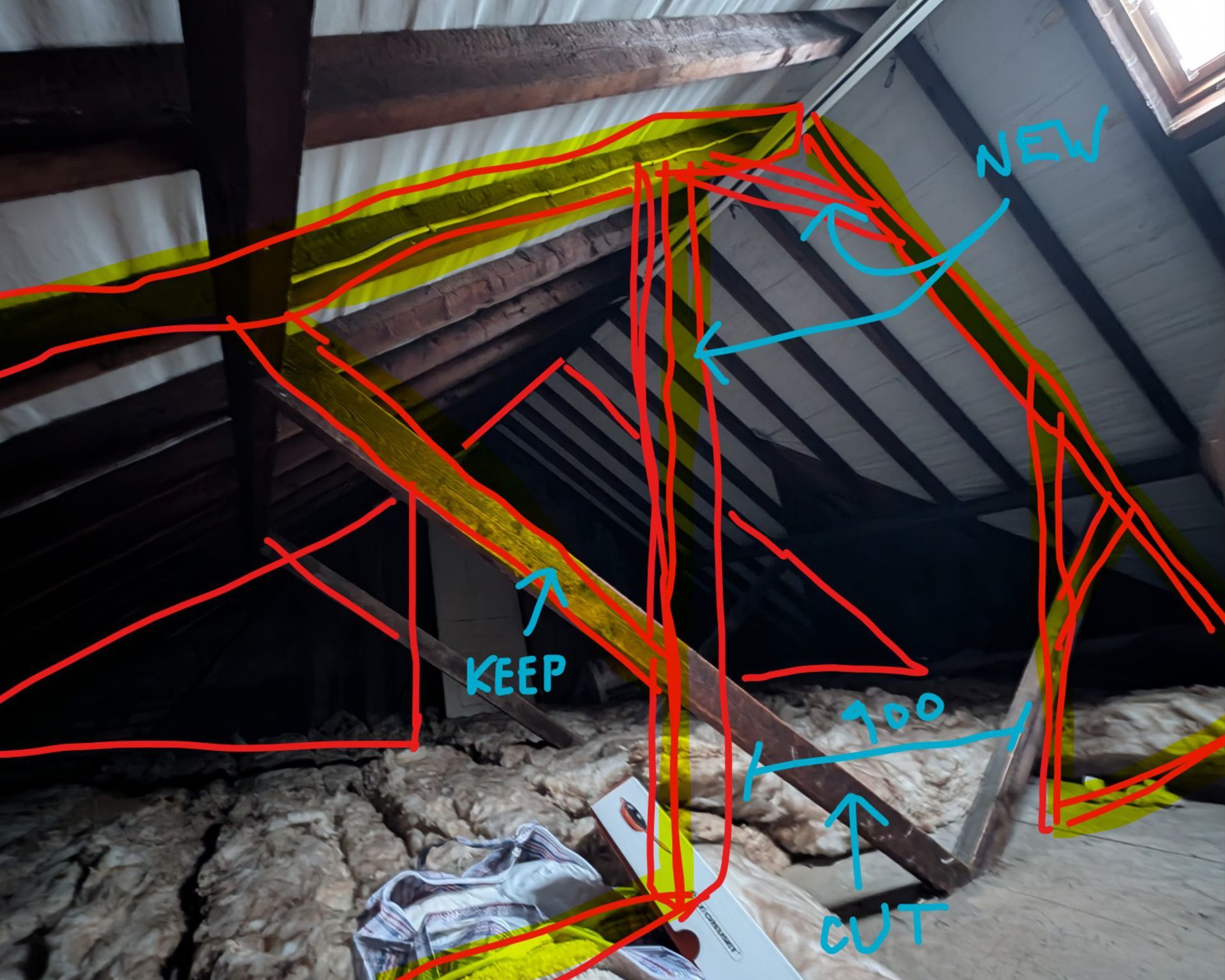
An example sketch issued to the structural engineer on a recent project that has a tight budget. We can engage early with specialist suppliers and consultants to test cost saving ideas - such as being able to retain as much original structure as possible in this sketch.
Our project cost estimating strategy
We have developed a budgeting strategy for projects that more closely reflects the London construction market and typical projects. This approach separates three types of construction work (new build extension, existing refurbishment, light refurbishment) and gives a sqm rate to apply to each area. The advantage for this is that often clients seek to upgrade entire houses but mainly focus budget thoughts on the extension. Works to the existing house have a major impact on the final budget with sqm rates adding up when accounting for new flooring, plastering, re-wiring or plumbing, as well as general making good and final decorating.
The below figures are what we advise to clients as realistic budget guidelines for residential construction within London in 2025 and into 2026. All costs are approximate based on sqm rates for fully fitted projects (includes bathrooms, kitchens, joinery, lighting etc). The figures do not include VAT, local authority or professional fees.
Benchmark:
Extension: £3000 - £4000 /sqm
(all new floor area added to a project in rear and side extensions or loft spaces).
Existing refurbishment: £2000 - £3000 /sqm
(existing area of house that is being completely renovated with new layouts, services, kitchens or bathrooms).
Light refurbishment: £500 - £1000 /sqm
(existing area of house that is being upgraded, typically the hallways, stairs, front living and bedrooms).
By calculating the floor area of each type of work and multiplying it by the above benchmarks, you can provide an accurate price range for your project. The range will assume simpler volumes, limited bespoke items and simpler finishes at the lower scale, with higher end finishes, integrated joinery and quality systems at the upper end of the range.
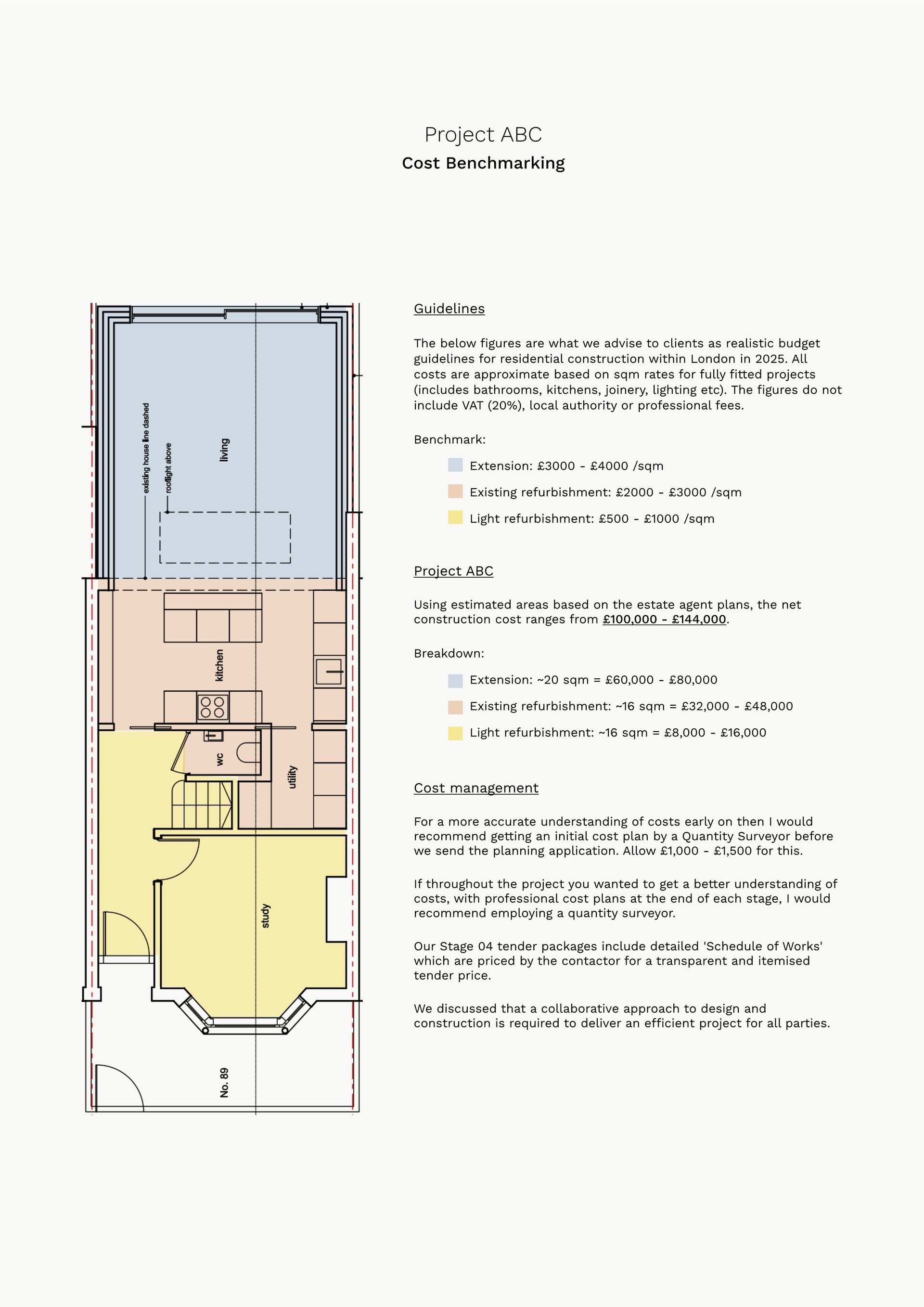
An example cost benchmarking during concept design for a ground floor rear extension and loft conversion to a house in Leytonstone, East London.
A real project example Cost Benchmarking
The adjacent page is an example sheet from a cost benchmarking exercise for a House in Leytonstone, London.
The clients are seeking to add a full width rear extension with a living/ dining/ kitchen room that integrates into the existing house footprint adding both a ground floor wc and utility room. The existing living room and corridor spaces will be upgraded.
Using our benchmarking strategy the floor plan was split into three zones and we applied the cost estimate range per zone as follows:
Extension: ~20 sqm = £60,000 - £80,000
Existing refurbishment: ~16 sqm = £32,000 - £48,000
Light refurbishment: ~16 sqm = £8,000 - £16,000
Using estimated areas based on the estate agent plans, the net construction cost ranges from
£100,000 - £144,000.
Conclusion
We will explain additional costs in more detail in the journal below, however the client here wanted higher level finishes and a bespoke extension design. The net construction budget was set at £140,000.
Construction budget - £140,000
VAT (at 20%) - £28,000
Surveys, professional and statutory fees - £25,000
Total budget - £193,000
Budgeting for a project beyond net construction cost
Understandably, clients want to know the "all in" total cost of a project. The previous budgeting exercise is for net construction costs but above this you also have VAT, surveys, professional fees and statutory fees. Additionally, money may need to be set aside if there is requirement for new Furniture, Fixtures & Equipment (FFE) - these are soft furnishings that are typically not part of the Total Sum in the Construction Contract.
As a rule of thumb, clients should allow 20% VAT to be added to net construction cost and anticipate an additional sum of 15-20% for all surveys, professional and statutory fees.
We will run through each additional cost in detailed sections below.
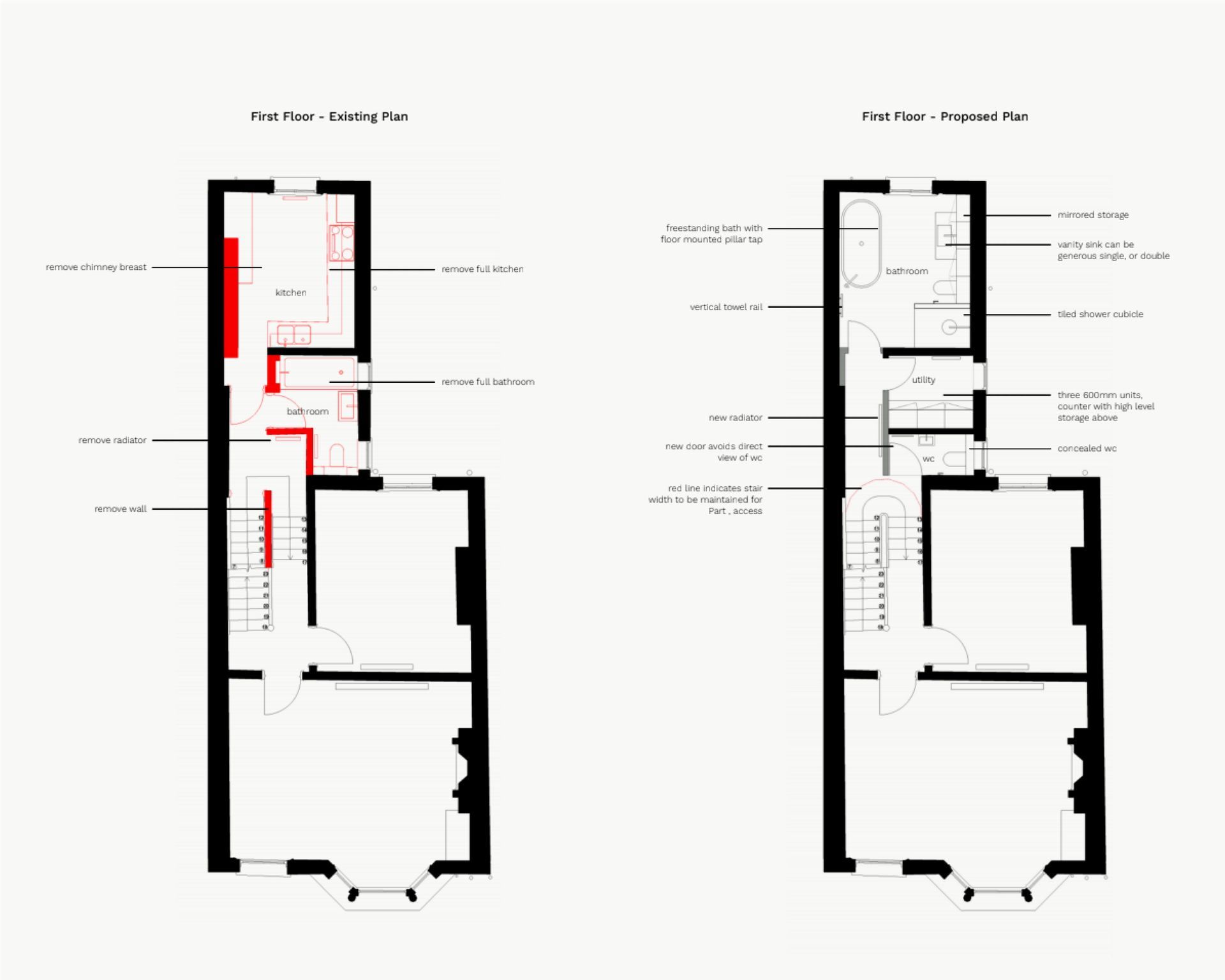
An example plan issued to the contractor on a recent project during concept design stage. The client requested early cost analysis and with the contractor already appointed, we can liaise with them from early stages for high level cost appraisal.

As the project develops and becomes more detailed, architects can begin to engage key suppliers. This drawing was produced to send to a series of bespoke window and joinery manufacturers we have worked with before. It details in enough information the sizing and key relationships of each item, so that we can request initial quotes for the rear façade joinery. These quotes are never fixed until full specifications and tender are released, but it can provide a good estimate of the work and tests market feasibility.
Surveys, Professional Fees and Statutory Fees
During the process, you will need to engage and instruct other consultants and specialist surveys. See the list below and some benchmark figures for estimating purposes only (figures all exclude VAT). Please note that the list is not exhaustive and was drafted based on my experience with similar projects in London.
Required Services:
Full Measured Survey
First step is always to get a full measured CAD survey of the house. £1,500 - £2,500.
Drainage Survey
If there are issues with the below-ground drains, it is best to identify these early with a survey. In addition, you may need information regarding manholes as any work affecting a public sewer may require a build-over agreement. £400 - £600.
Structural Engineer
You will need a structural engineer who will provide the necessary structural drawings and calculations for the tender pack, building control, party wall, and construction. Structural Engineers fees will be based on the complexity of project and amount of elements to design - expect 1-2% of construction budget.
Building Control Officer
Typically we recommend using a private firm known as an Approved Inspector. As soon as the detailed drawings are ready they will be issued to the BCO for an initial check, they also visit the site during construction to inspect and approve that the works are being completed according to the regulations. £1500 - £2500.
Read more on Party Wall and Building Control on our journal post:
Guide to Building Control, Party Wall Agreements and Principal Designer Role.
Party Wall Surveyor
You will need a party wall surveyor for any work on a shared wall or garden wall. The basic cost for a notice to be issued is £75 - £100 and these will need to be issued to all the attached freeholders and leaseholders. However, if an award is required, the costs can range between £800 - £1,000 per award.
Planning Applications
For information on full planning applications and permitted development costs, please refer to our detailed post:
Guide to Planning Permission and Permitted Development in London.
Optional Services:
Quantity Surveyor
If desired, for a more accurate understanding of costs early on then we recommend an Initial Cost Plan. £1,000 - £1,500. There is also the option to use a QS for the full service until the end of the project, this would cost £8,000 - £10,000 and may be best suited to higher valued projects.
Landscape Designer
A landscape consultant can re-image your outdoor spaces if you want more substantial changes to the garden, they will also be able to advise on how to preserve or replant. Costs will vary on scope.
Lighting Designer
Architects include fixed lighting specifications for a functional home with typical lighting controls. If there is an ambition for a more bespoke system, a lighting designer would need appointed. Costs will vary on scope.
MEP or AV Consultant
Architects include specifications for a functional home with layouts, coordination and sizing for straightforward servicing proposals. For complex systems, like use of an heat pumps, MVHR, solar panels or audio/ visual, we recommend a specialist M&E or AV consultant. Costs will vary on scope.
Asbestos Survey
If there is suspected asbestos (based on the period of house and any previous works) a survey is required. Allow £500.
Value Added Tax (VAT)
VAT applies to construction costs in the UK, but the rate varies significantly (0%, 5%, or 20%) depending on the type of project, the property's use, and whether the builder is VAT-registered. The standard rate of 20% is the default for most work unless specific conditions for a reduced or zero rate are met.
Standard Rate (20%)
The standard rate applies to most construction services and materials, including:
- Renovations, maintenance, and repairs of existing residential properties.
- Construction of most new commercial buildings (offices, shops, warehouses).
- Building extensions or conservatories.
- Professional services such as architects' and surveyors' fees.
- Hiring goods/equipment.
Reduced Rate (5%)
A reduced rate of 5% may apply to specific residential projects:
- Renovating empty homes: For residential properties that have not been lived in for at least two years.
- Conversions: Changing the number of dwellings in a building or converting a non-residential building into a home.
- Energy-saving materials: Installation of qualifying energy-saving materials like insulation, solar panels, and heat pumps.
Zero Rate (0%)
Zero-rated projects mean no VAT is charged. This typically applies to:
- New dwellings: The construction of a qualifying new residential building, provided specific conditions are met.
- Charity buildings: Construction of new buildings intended solely for non-business charitable use.
- Relevant residential buildings: New buildings used for specific residential institutions like care homes, student halls, or hospices.
- Works for disabled people: Certain alterations to a home to suit a disabled person's condition.
For detailed official guidance, refer to HMRC's Buildings and construction VAT Notice 708.
Cost management throughout a project and role of Architects vs Quantity Surveyor
As a RIBA Chartered Practice and as a registered architect through the governing body Architects Registration Board (ARB), we are bound by two codes of professional conduct. The "RIBA Code of Professional Conduct" (link here to full document) states that:
"Members must use reasonable endeavours to advise their
client on the need for specialist advice to assist the client to ascertain and control the cost of the project".
It is essential to note that while architects assist clients with managing project costs and can advise from a design perspective on how to strategically apportion budget by prioritising value gains, architects are not professional cost consultants - this is the role of Quantity Surveyors.
If throughout the project you wish to get a better understanding of costs we recommend employing a Quantity Surveyor (QS). A QS will provide detailed cost plans at the end of every stage and can provide a Bill of Quantities for the Principle Contractor to price during tender. For larger projects (over £500,000), a QS would be an essential appointment to have a dedicated professional manage your budget in detail.
For projects under £500,000, a full QS service may be considered too expensive. However, for a more accurate understanding of costs early on, you can employ a Quantity Surveyor to produce an Initial Cost Plan after the initial design stages. Allow £1,000 - £1,500 for this.
How do we manage cost at Armstrong Campbell Architects?
We believe in an active collaborative approach to design and construction is required to deliver an efficient project for all parties. We work with clients from our first meeting to establish budgets and project scopes. We have a network of collaborators of other professional services and contractors that can provide early engagement.
Our Stage 04 tender packages include detailed 'Schedule of Works' which are priced by the contactor for a transparent and itemised tender price. This means prior to construction, costs can be aligned. From this point, the best advice that can be given for managing cost is to avoid changes during construction. Late design changes significantly delays contractor's progress on site and therefore can cost more than the same specification or detail, if included prior to tender.
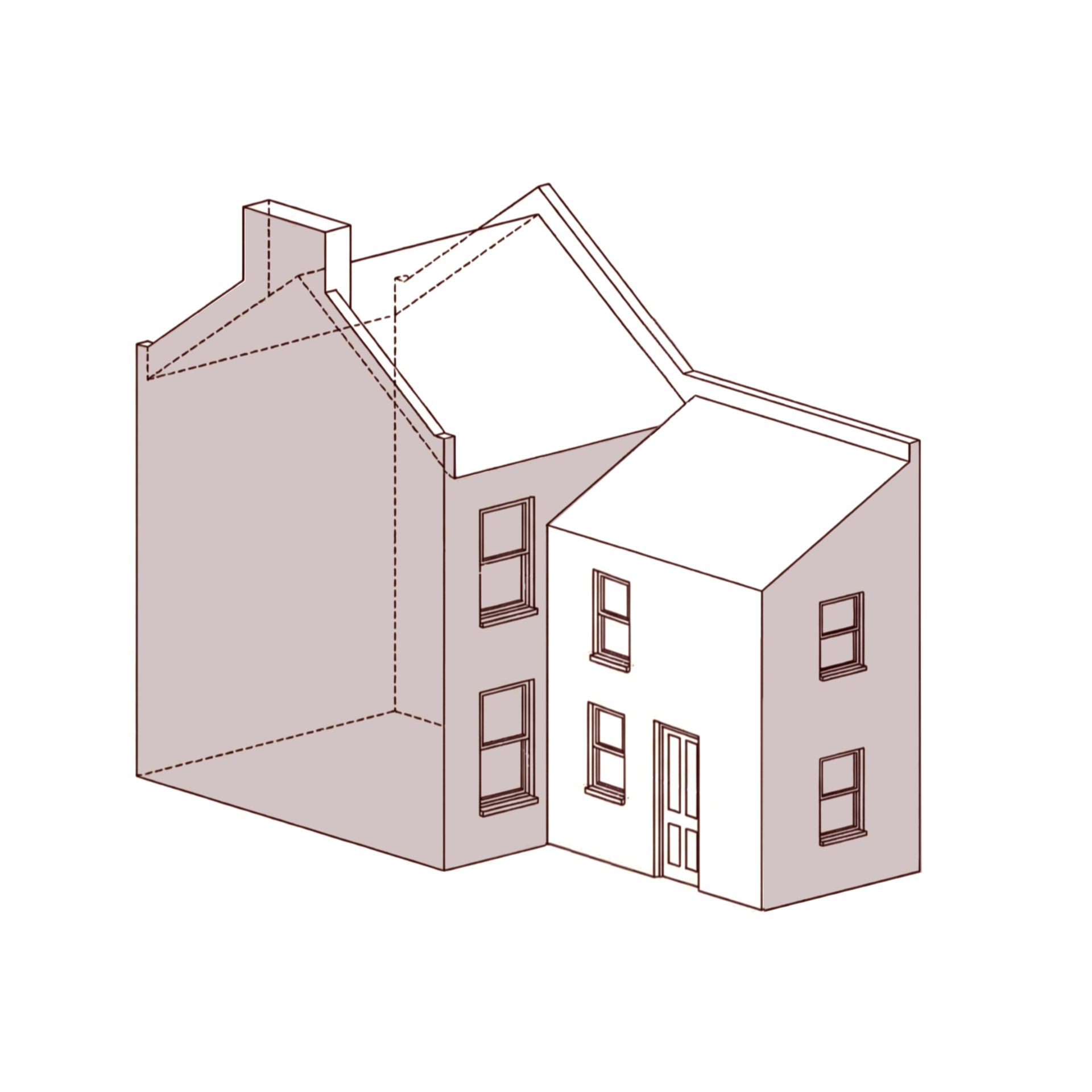
Existing Typical Victorian Terrace House
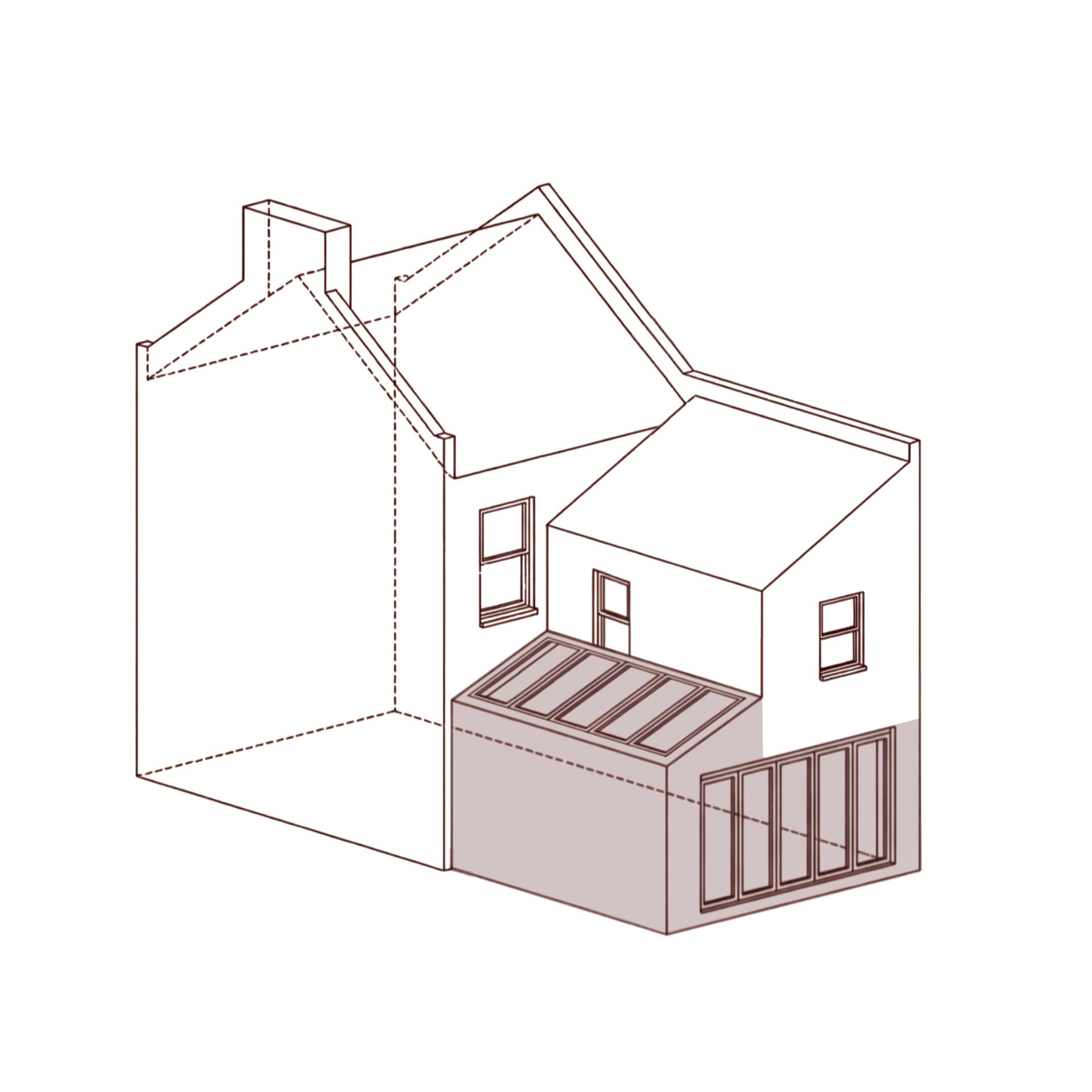
Side Return Extension
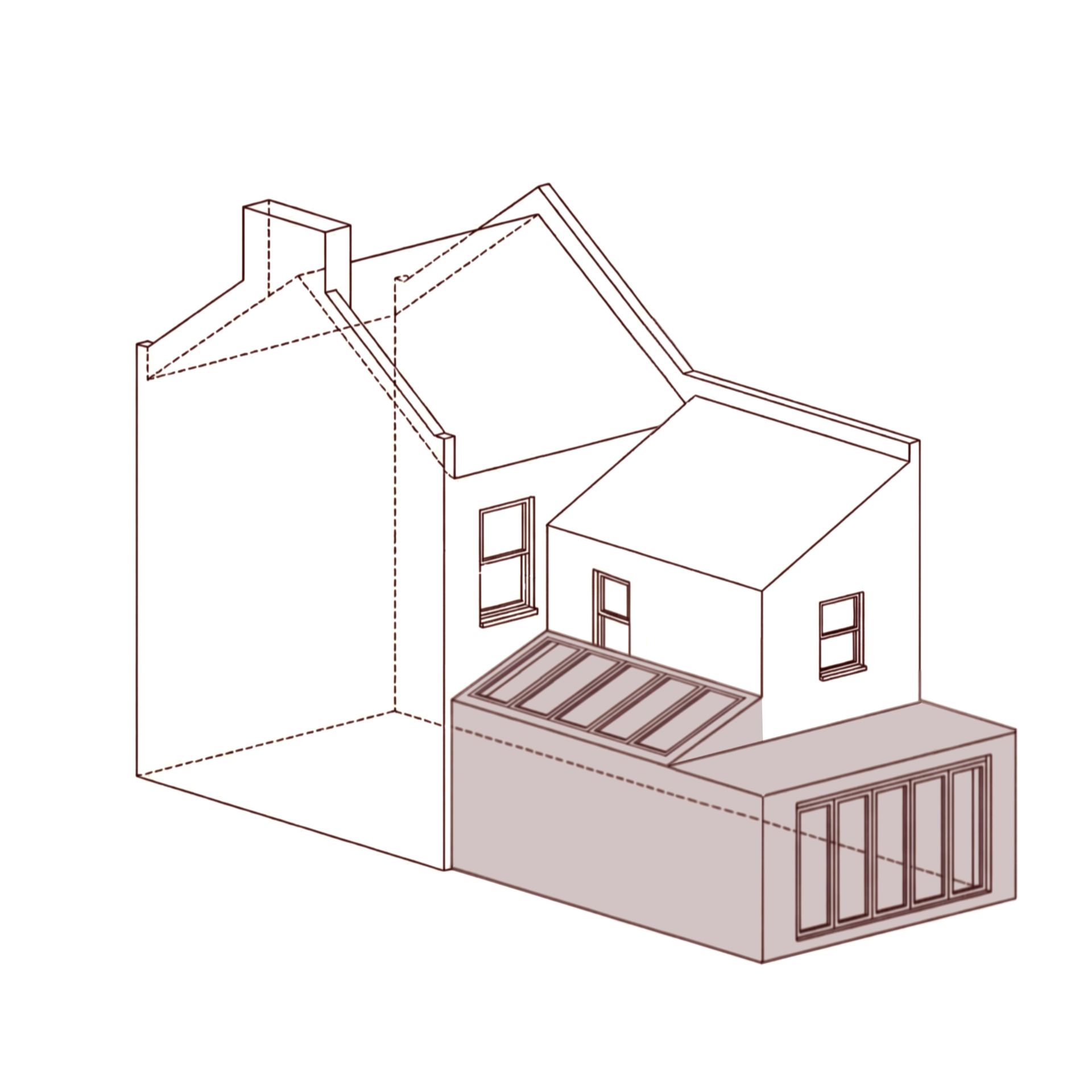
Ground Floor Side Return and Rear Extension
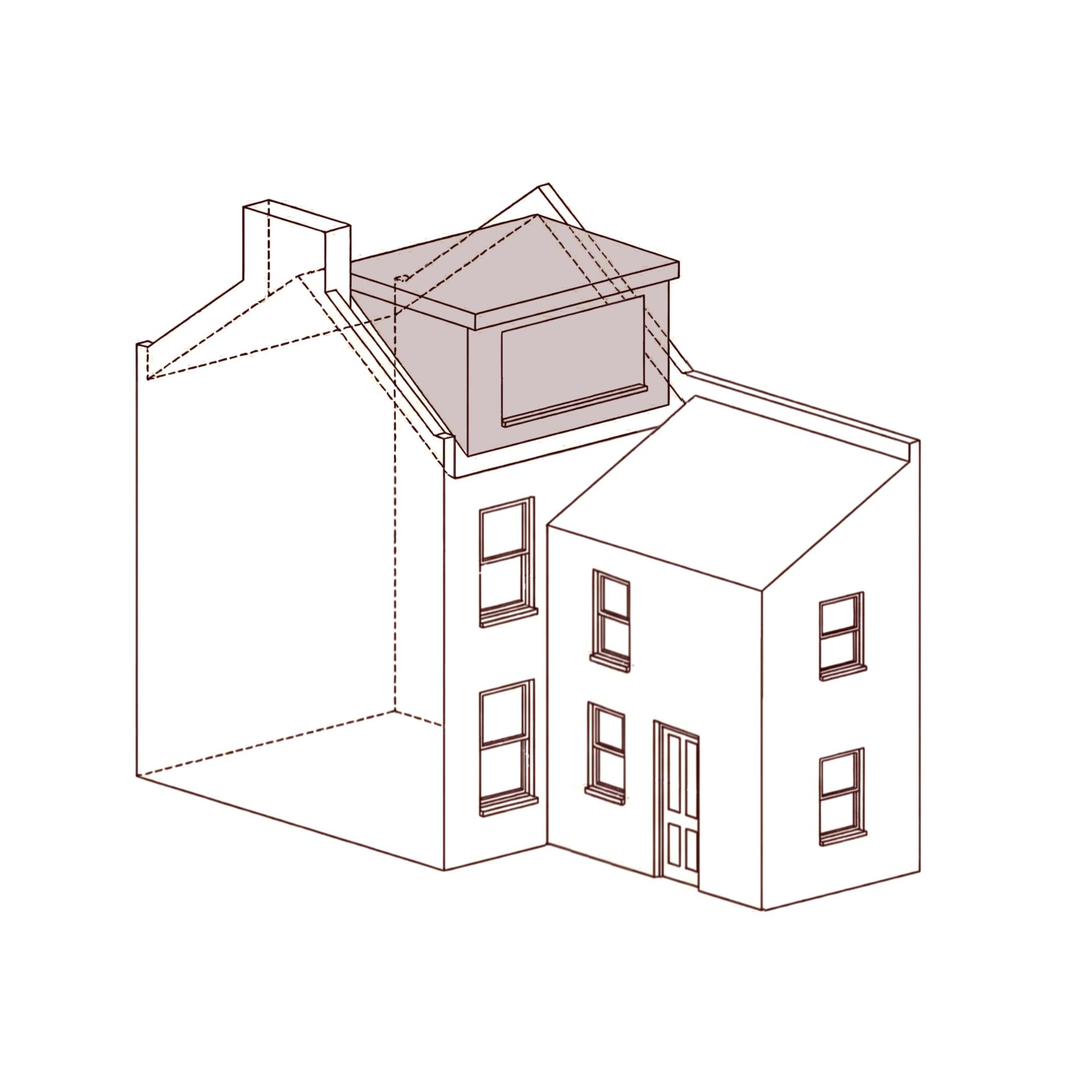
Dormer Roof Conversion
Extension Costs Overview in London (2026)
Single-storey
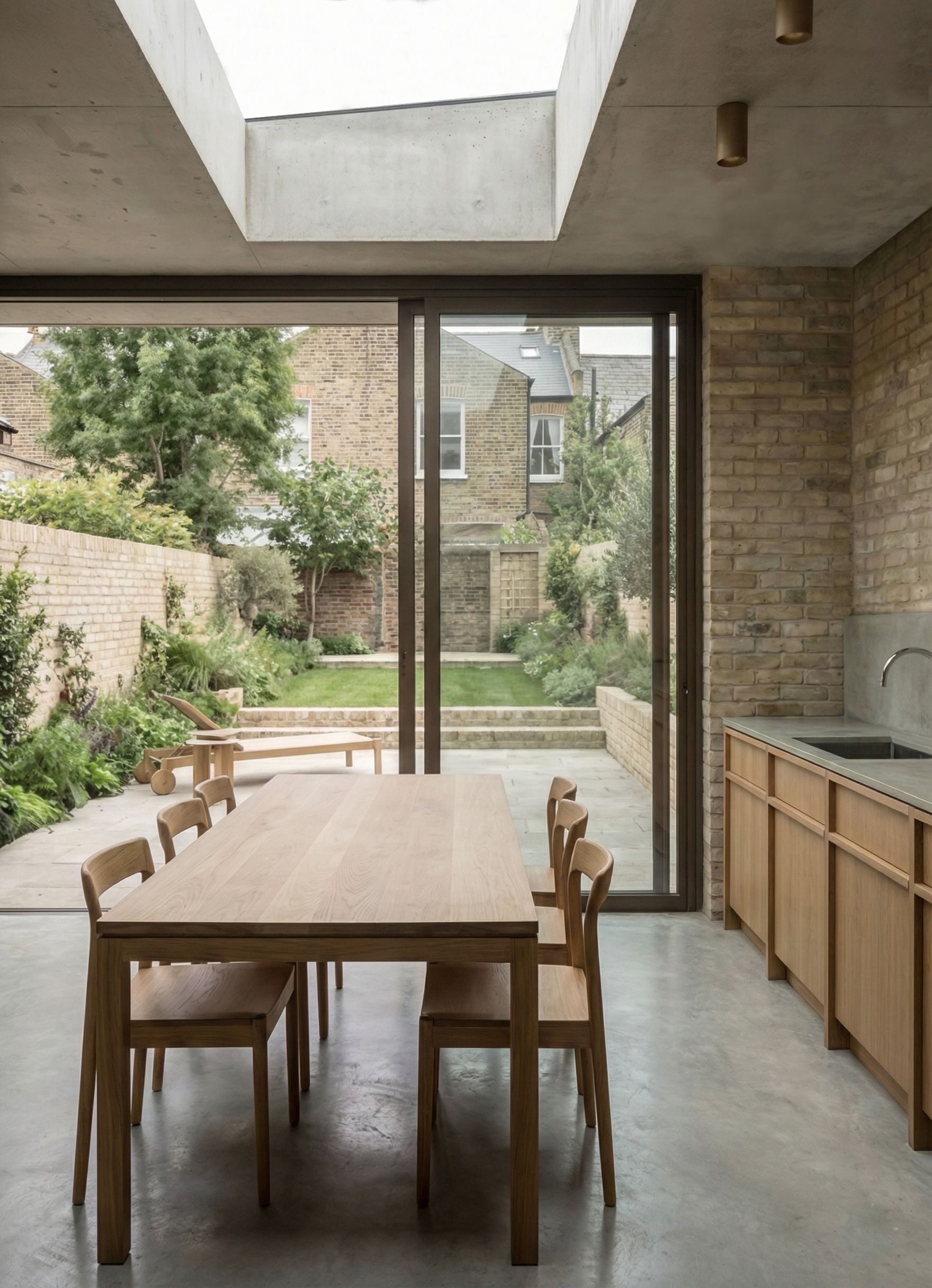
The single-storey rear extension remains the most popular domestic project in London. A basic specification includes standard brickwork matching existing, double-glazed aluminium windows and doors, flat roof with membrane waterproofing, standard kitchen fit-out as a separate budget, engineered wood flooring, radiator heating, and standard electrical and lighting. A higher specification may include quality facing brick, large format sliding doors spanning 3-4m, large skylights, underfloor heating, flooring such as microcement or solid wood and high-performance insulation materials.
Two-storey
Two-storey extensions cost more per square metre than single-storey work, which surprises some people initially. The reality is that building upwards introduces complexity at every level. The cost premium exists because of more complex structure with first-floor joists and loadbearing requirements, scaffolding required for height access, two sets of windows and doors, plumbing to first floor often for ensuite bathrooms, more complex roof structure, and longer construction time.
Side returns
Side returns reclaim what was often dead space, a narrow passage alongside Victorian and Edwardian terraces that served only to provide space and light between neighbours. They usually cost more per square metre because of fixed costs (scaffolding, skips, fees etc) spread over fewer square metres as well as structural work removing large sections of existing wall.
Loft conversions
Loft conversions offer better value per square metre than ground floor extensions because you're working within the existing footprint with no foundations needed, smaller scale roof alterations, less external work, and shorter construction time of typically 8-12 weeks.
There is still regulatory complexity as loft conversions trigger fire safety requirements that ground floor extensions don't. You need a protected escape route, which often means upgrading your staircase and installing fire doors throughout the house.
Existing joists are often not structurally robust enough to take the load of a new living floor, requiring new structural support. If headroom is generous, a cost effective method can be achieved by retaining existing joists and nestling new floor joists in between, or above. However, typically in Victorian and Edwardian properties the floor to ceiling height is limited in lofts. Given that roof lines are not allowed to be raised due to planning policy, often the required method is to replace the existing floor joists and ceiling to the upper floors.
Additional Considerations for Cost Budgeting
Contingency: 5-10%
Essential buffer for unexpected ground conditions, poor soil, or hidden obstructions, price increases on materials, minor design changes during construction, unforeseen structural issues, and weather delays requiring extended hire. Most projects use 50-80% of contingency and having it in place means these issues become manageable problems rather than project-threatening crises.
Temporary Living Costs
Extensions disrupt daily life more than people anticipate. You can live through a rear extension build, but prepare for dust to penetrate everywhere despite plastic sheeting, for noise starting early and continuing all day, access to garden disappearing, kitchen being unusable for months. Most families cope, but it's tiring and stressful. Allow cost of a temporary kitchen set-up and potentially temporary furniture or fixtures.
If works are extensive, you may need to move out. Should this be the case allow for rental and moving costs. Usually this will be paired with temporary storage facilities for your personal belongings and items such as furniture or curtains that want to remain dust and damage free.
Existing House Works
Extensions don't exist in isolation. Connecting new to old creates interfaces that need resolving. These costs to the existing house can add up quickly and are difficult to avoid if you want the finished result to feel cohesive. Following our above Cost Benchmarking Strategy will ensure appropriate budget is given to existing rooms.
Landscaping Reinstatement
Once you have completed your beautiful new home, you will want a garden that is at least clean and tidy. Gardens are damaged by construction and it is worth budgeting for making good, if not planning a full garden design. Depending on size and scope, it could cost anywhere from £7,500 - £15,000 for a fairly simple reinstated garden. Typical costs to consider:
- Paving adjacent to an extension
- Turf and planting reinstatement
- Boundary walls or fencing
- Drainage and soakaways
- External lighting
Frequently Asked Questions About Extension Costs
How accurate are online cost calculators?
Not very. They use average costs per m² that don't account for your specific site constraints, specification preferences, property type and age, location within London, or current market conditions. Use them for very rough guidance and feasibility testing before seeking real quotes for your project. Online calculators are useful for initial ballpark figures but dangerous for detailed budgeting. Our Cost Benchmarking Strategy provides a means of adding some nuance to an initial estimate, although it is still only rough guidance.
Should I get multiple quotes for professional fees too?
Yes, but don't choose on price alone. Architects under charging either aren't including full service, with hidden extras later, or are not allowing sufficient working hours to properly execute the project. Architectural fees reflect service scope and expertise, reducing fees usually means reducing service, which creates gaps that cause problems later.
For other professional services we would typically send out invitations to receive three quotes for the package. We find quotes for surveys and building control services are often very closely aligned. In this case, a single quote from a trusted collaborator is sufficient and prioritises speed of appointment. Architects can advise if single quotes fall within a reasonable and expected range.
How much should I budget for a new kitchen?
Kitchen fit-out can cost anywhere from £10,000 - £50,000 depending on size, material quality and fittings. Kitchens are typically the single biggest item spend on projects but are also usually the most-used room in extended homes; compromising excessively here can undermines the overall project.
Budget realistically based on priorities, options include:
- High street kitchens from Howdens, Wickes or Ikea provide good variations of designs and are very cost effective.
- Traditional designer kitchen companies such as Baumstark or Plain English Kitchens are high quality and have a price tag to match the product.
- A number of new kitchen manufacturers such as Reform or Vermland offer interesting materials and detailing in contemporary designs, again at the higher-end scale.
- Commonly on DIY projects, Ikea or Howdens base units are paired with bespoke door fronts from Plykea or Naked Kitchens. While there is cost savings in using basic base units, the door fronts from these companies are premium priced and becomes relatively expensive.
- Finally, contractors we use have their own joiners or trusted subcontractors that can build bespoke kitchens for surprisingly good value. Plywood is typically used for the base units which is more robust than high street brands chipboard bases. Door fronts can range from a cost efficient spray painted MDF, to mid-ranged timber veneered plywood, or high-end solid timber or metal finishes.
Does Brexit and World Conflicts still affect construction cost?
Material costs have increased significantly since 2019 due to Brexit trade barriers, COVID supply disruptions and increasingly more world conflicts in Europe and the Middle East. These are affecting energy and materials, as well as contributing to general high inflation. Budget based on current pricing and include contingency for any further increases during your project.
Should I wait for costs to come down?
Construction costs have risen above general inflation with timber, steel, and manufactured products having all seen sustained price increases. Typically these rises form the new benchmark and delaying projects is unfortunately more likely to find rising costs.
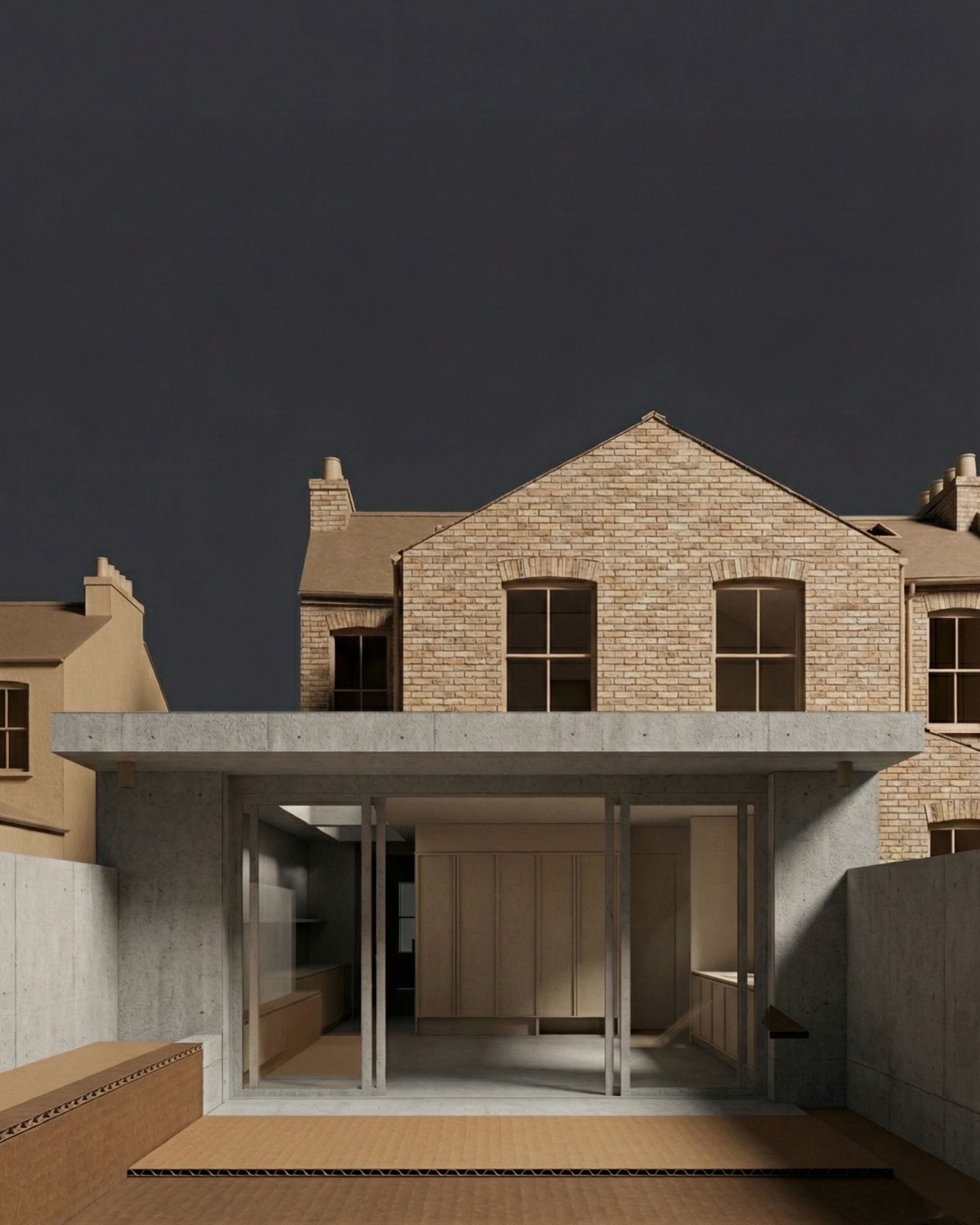
A concept design visualisation, understanding the full scope of the project - in this case, the client was seeking to test the extent the ground floor rear extension could interact with the garden externally. One proposal was the inclusion of a fixed canopy which blurs the boundary between outside and inside, when paired with a full width sliding minimal door system.
Contact us for Full Architecture Design Services.
Read more of our journal guidance:
Step-by-step guide to RIBA Plan of Work - Guide to RIBA Plan of Work stages→
A detail dive into the design and construction process - Guide To Building Control, Party Wall Agreements and Principle Designer Role. →
Everything you need to know on planning permission - Guide to Planning Permission & Permitted Development in London →
Armstrong Campbell Architects is a RIBA Chartered Architect Practice based in East London, specialising in residential extensions, refurbishments and new builds. As a principal-led practice, we offer a personal and bespoke architecture and interior design service.