Do I Really Need an Architect for My London Extension or Loft Conversion?
Planning a home extension, loft conversion, or new build in London? You're probably weighing up whether hiring an architect is worth it—or if you should go with a design-and-build firm to keep things simple and save money.
Here's the honest answer: Yes, you want an architect—if you want a home that truly reflects who you are, functions beautifully for how you live, and adds genuine value to your property.
That's what architecture does. It's not just about making your house larger. It's about making your life better.
At Armstrong Campbell Architects, based in Leytonstone, we specialize in residential extensions and conversions across London. We believe every home project should be a collaborative journey—one where your vision meets our expertise to create spaces that genuinely work for you. That’s why we work closely with clients to create spaces that reflect their personality, lifestyle, and aspirations.
In this guide, we'll explain exactly what you get when you hire an architect, why it's worth the investment, and how to know if you're ready to start your project.
Why Work with an Architect for Your London Extension?
Hiring an architect isn't just about getting drawings done. It's about having a partner who brings vision, technical expertise, and problem-solving skills to your project—from initial sketches to the moment you move back into your transformed home.
Here's what that really means in practice:
Design Quality That Adds Real Value
We've all seen poorly designed extensions—the ones that look tacked on, feel disconnected from the original house, or create awkward internal layouts that never quite work. Good architecture integrates seamlessly with your existing home while adding something genuinely special.
The financial impact is significant. A well-designed extension or loft conversion typically adds 15-20% to your property value in London—often substantially more than the project costs. But value isn't just financial. It's about creating spaces you actually want to spend time in. Natural light throughout the day, ceiling heights that feel generous, material choices that age beautifully, space planning that works—these design decisions shape your daily experience at home for years to come.
Consider this: You might spend £50,000 or £500,000 on an extension. A design-and-build firm creates something functional but generic. An architect designs spaces that create additional value to your property while also being a joy to live in. The money you invest in architectural fees will be returned through better design.
Budget Confidence and Smart Decision-Making
One of the biggest myths about architects? That we're expensive and push clients to overspend on unnecessary luxuries.
The reality is quite different. Our job is to help you make informed decisions about where to invest your money. We'll tell you when expensive materials aren't worth it, when you can save on structural solutions, and when spending a bit more will make a dramatic difference to how your extension looks and functions.
Navigating London's Planning Complexity
London planning can feel like a maze—conservation areas, Article 4 directions, permitted development rights, local design guides. Each borough has different policies and priorities. Each project has unique constraints and opportunities.
We've been navigating this landscape for years across Waltham Forest, Hackney, Newham, Redbridge, and beyond. We know what local planning officers look for, how to address neighbour concerns before they become formal objections, and when it's worth appealing a decision versus redesigning the approach.
This expertise saves time and reduces stress with projects that proceed smoothly versus those stuck in costly revision cycles or refusals.
We also handle the entire submission process: preparing drawings, writing design statements, liaising with planning officers, coordinating consultants, responding to queries. You stay informed and make decisions, but we manage the administrative complexity.
Related reading: [The Complete Guide to Planning Permission & Building Regulations in London →] (link to Post 2)
What Makes Armstrong Campbell Architects Different?
London has hundreds of architects. Why choose us for your home extension or loft conversion?
We Specialise in Residential Work
We're not juggling commercial developments or large institutional projects. We focus exclusively on homes—extensions, loft conversions, whole-house renovations, and new builds. This specialization means we deeply understand how families actually live in their spaces, what adds value to London properties, and what works practically for everyday life.
When you're our client, you're not competing for attention, your home gets our full focus.
We're Design-Led But Pragmatic
Beautiful design matters to us—we wouldn't be architects otherwise. But so does buildability, budget reality, and long-term practicality. We won't propose something stunning that's impossible to build or costs twice your budget. Every design decision balances aesthetics, function, and value.
We're also honest about what's achievable. If your budget doesn't match your wishlist, we'll tell you upfront and help you prioritize. Better to have clear expectations early than disappointment later.
We're Based in East London
We live and work in the community we serve. We understand Victorian and Edwardian terraces intimately, know the quirks of local planning departments, have relationships with reliable contractors, and appreciate the specific challenges of building in London's densely packed neighbourhoods.
When we visit your home in Leytonstone, Walthamstow, Stratford, or anywhere across London, we're not just seeing a property—we're seeing the context, the potential, and the challenges that come from years of local experience.
We Believe in Collaborative Design
Your home should reflect your personality, lifestyle, and aspirations—not our ego. We listen carefully, ask questions about how you actually live, and design spaces that solve your specific problems.
You'll be involved in every significant decision, from overall layout to material selections. But you won't be overwhelmed with choices or left uncertain about what to do. We guide the process with expertise while ensuring it remains your project, your vision.
Real Project Example: Victorian Terrace Extension in Leyton
This all comes together in practice through a recent project.
The Brief
A young family in a 3-bedroom Victorian terrace wanted a larger kitchen, separate utility area, and better connection to their garden. They loved cooking and entertaining but their galley kitchen felt cramped and dark. Budget: £95,000 including all fees.
The Challenge
It wasn't straightforward:
- Narrow plot (4.2m wide)
- Conservation area (stricter planning requirements)
- Party walls on both sides (formal agreements needed)
- North-facing garden (challenging for natural light)
- Limited budget (every decision mattered)
Our Solution
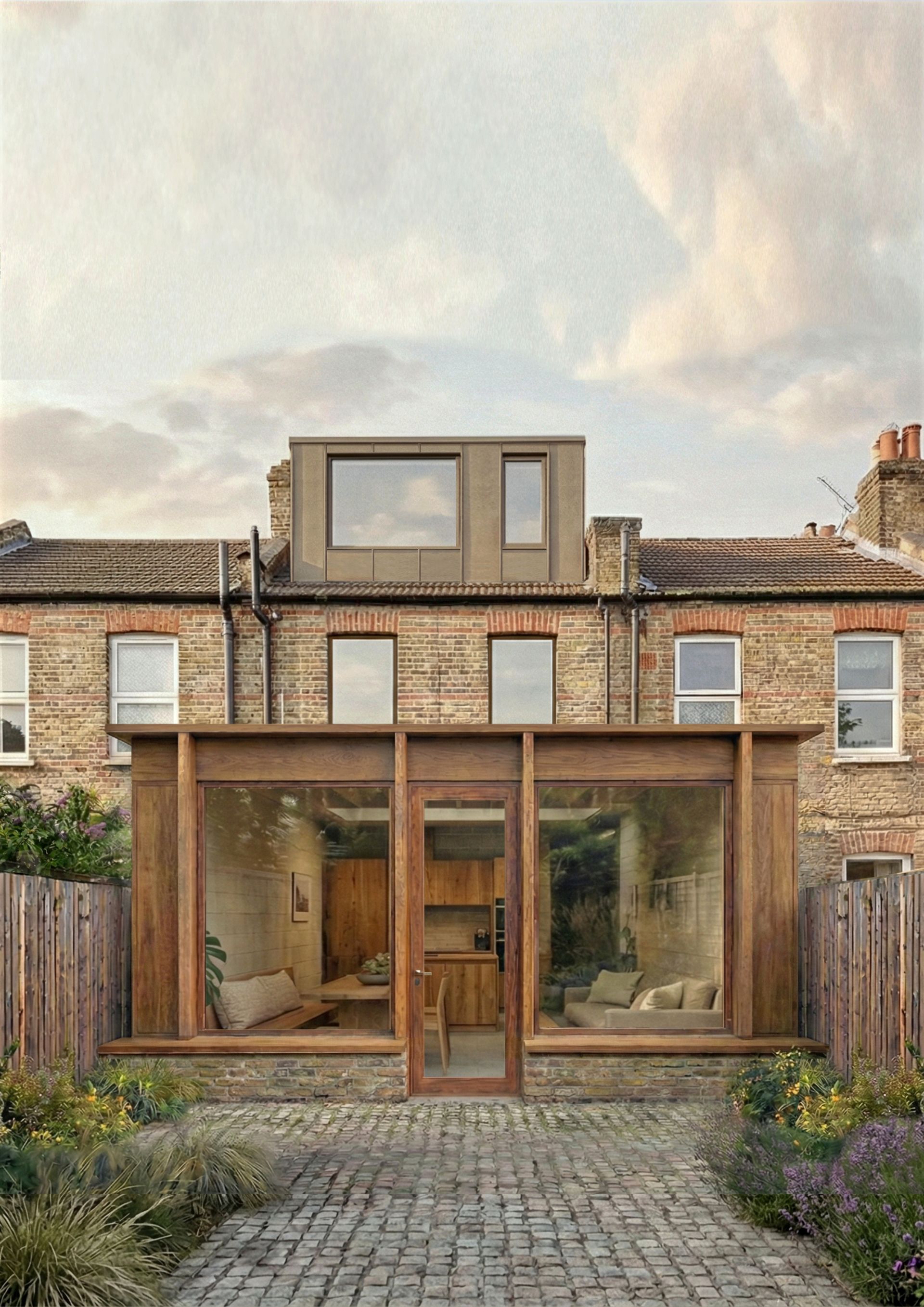
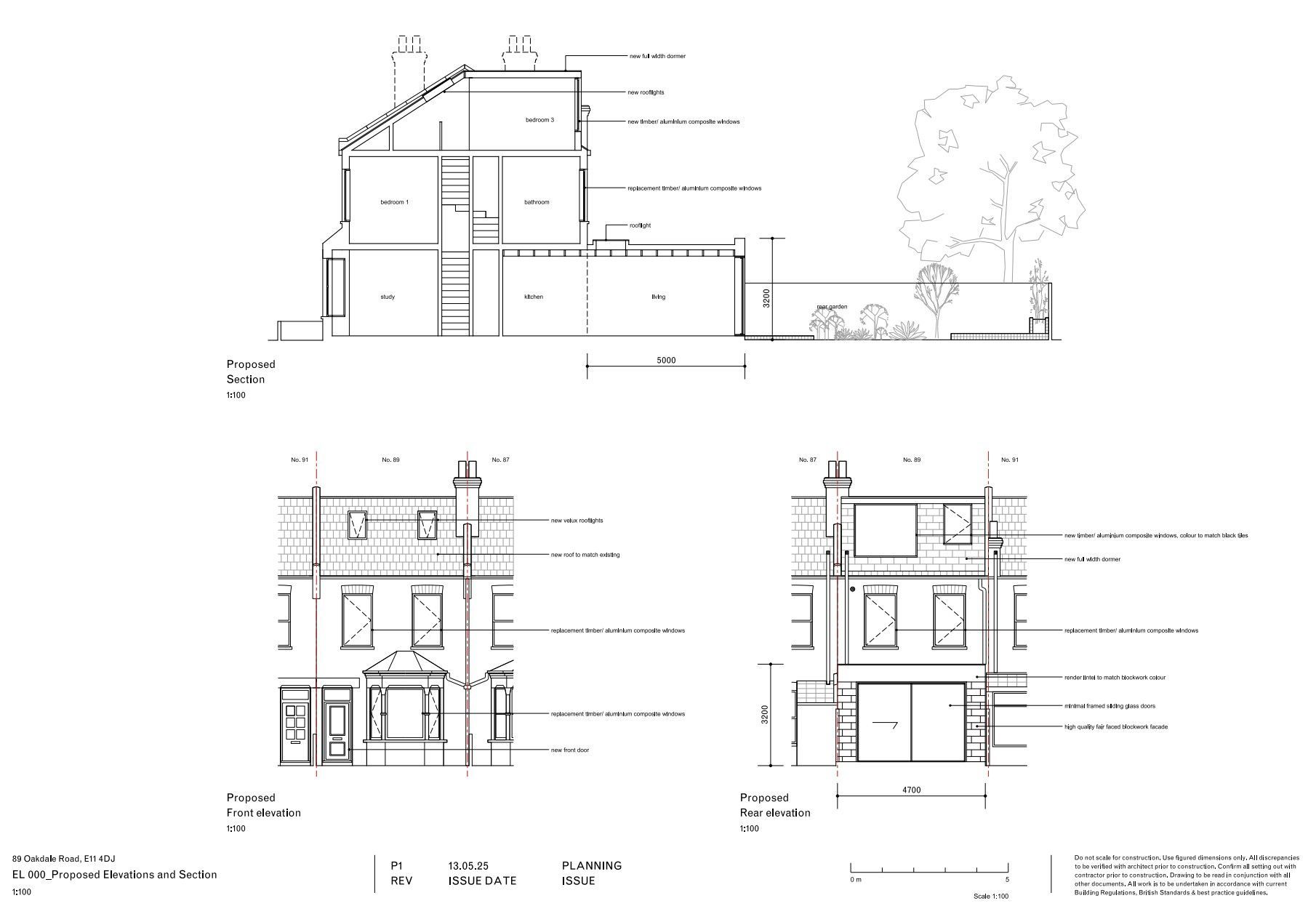
We designed a 4-meter single-storey rear extension with a pitched roof that respected the Victorian character—important in the conservation area. This avoided the "flat-roof box" look that planning often rejects.
The key design move: a large rooflight positioned above where the kitchen island would sit. Even though the garden faces north, this brought southern light from above, deep into the plan. The kitchen feels bright throughout the day despite rear-facing windows only getting limited direct sun.
We created a side utility area by cleverly reconfiguring the existing floor plan—avoiding additional construction costs while giving them the storage and functionality they needed.
How Much Does an Architect Cost for a London Extension?
Let's address this directly because it's probably one of your main questions.
Typical Fee Structures
Most London residential architects charge either a percentage of construction costs (8-12% is standard) or a fixed fee agreed upfront based on project scope.
Percentage fees scale with project complexity:
- Simple single-storey extension: 8-10%
- Two-storey or complex layouts: 10-12%
- Listed buildings or conservation areas: 12-15%
- Full house renovations: 12-15%
For a £100,000 extension, you'd typically pay:
- Architectural fees: £8,000-12,000
- Structural engineer: £1,200-2,000
- Planning application: £450-600
- Building Control: £800-1,200
- Party wall surveyor (if needed): £800-1,500
- Total professional fees: £11,250-17,300
This leaves £82,700-88,750 for actual construction.
Our Fee Structure at Armstrong Campbell Architects
We offer flexible engagement options to suit different project stages and budgets:
Home Design Consultation: £350
We visit your home, discuss your ideas, assess feasibility, and give honest advice about planning, design potential, and realistic costs. You walk away with clarity about what's possible—whether you hire us or not.
Planning Package: £2,500-4,500
This is for planning permission only, for clients that do not wish for full services. Planning will cover for floor plan layouts and a volumetric extension form, with indicative materials - e.g. London Stock Brick or Zinc Cladding. Planning package includes:
- Site visit
- Feasibility assessment
- Design options with floor plans
- Arrange for measured site survey
- Design and Access Statement
- Planning drawings and supporting documents
- Submit and track planning application on clients behalf
Full Architectural Service: 8-12% of estimated construction costs
This covers everything from concept to completion (all RIBA Stages 0 - 6):
- Site visit, feasibility and brief development
- Assistance in consultant appointments
- Assistance in survey requirements and appointments
- Management of Building Control approval
- Complete design development
- Four end of stage report documents - feasibility, concept, developed and technical design (RIBA Stage 1, 2, 3, 4)
- Progress meetings to review work and discuss design options for complete alignment.
- Planning application preparation and management
- Technical drawings and specifications
- Procurement advice
- Schedule of Works for greater clarity on comparing tender returns
- Contractor tender advice and coordination
- Building contract administration
- Regular site inspections throughout construction
- Quality control and problem-solving
- Handover and aftercare
What You Actually Get for Your Investment
Architectural fees might seem significant, but consider the return:
1. Design value: Extensions we design typically add 20%+ to property value.
2. Planning expertise: We have gained planning approval for every project we have worked on.
3. Cost control: Avoiding expensive mistakes, abortive work and contractor disputes saves most clients £5,000-20,000
4. Quality assurance: Independent oversight ensuring you get the product you're paying for.
5. Problem-solving: Every project has unexpected issues—we collaborate closely with contractors to resolve them quickly.
6. Time savings: We manage consultant coordination, authority submissions, and contractor queries so you don't have to.
Most clients find architectural fees return 3-5x their cost through better design, avoided problems, and increased property value.
What Happens If You Don't Hire an Architect?
Some people use design-and-build firms or online plan-drawing services to save on fees. These can work for very simple projects and many clients in the UK will go down this route, particularly if cost overrides quality or functional requirements. There are risks to this - primarily in spending money on a design that does not maximise your properties potential or works specifically for how you live.
Additionally there will be no independent professional to mediate any dispute and review work on site is being carried out to a high standard, potentially leading to poor quality or future remedial work.
What Happens Next: Your Journey with Armstrong Campbell
If you decide to work with us, here's what the journey typically looks like:
Step 1: Initial Consultation
We visit your home to discuss what you want to change and why. We discuss how you live, what frustrates you about your current space, and what you're hoping to achieve.
We assess constraints and discuss feasibility. You'll get honest advice and a sense of whether we're the right fit for your project.
Step 2: Proposal & Agreement (1 week)
If you want to proceed, we send a detailed proposal outlining:
- Scope of services (which RIBA stages)
- Fee structure and payment schedule
- Timeline and key milestones
- What we'll deliver at each stage
- Terms and conditions
Once you're happy, we sign an agreement and get started.
Step 3: Concept and Design Development (4-10 weeks)
This is the creative phase. We develop design options, present ideas with sketches, visuals and reference projects, refine your favourite direction, and work toward a solution you're excited about.
You'll see your future home taking shape with opportunities to adjust and refine until it feels exactly right.
Want to understand this process in detail? [Read our complete guide to working with an architect through the RIBA stages →] (link to Post 3)
Step 4: Planning & Technical Development (8-12 weeks)
We prepare planning applications, coordinate with engineers and consultants, develop technical drawings, and ensure everything complies with building regulations.
This is where our expertise in London planning and knowledge working with local contractors and suppliers helps—we navigate the complexity and know where to invest the time, so you don't have to.
Need help understanding planning permission? [Read our complete guide to planning permission and building regulations in London →] (link to Post 2)
Step 5: Tender (4-6 weeks)
We issue the agreed tender package to either a single contractor for a Negotiated Tender, or to at least three competing contractors for a Competitive Tender process. For residential projects, both options are effective.
Some clients come to us already with a preferred contractor that has been recommended or they have used before. We can assist a Negotiated Tender with them to still ensure correct pricing and value is achieved for you - this process is often quicker and can be completed quicker with early contractor engagement.
The alternative, and perhaps more standard, route is to issue a tender package to two or more contractors for Competitive Tendering. Contractors will receive the same information at the same time and be requested to return an offer on a specific date - usually 4 weeks. There is then an assessment and review of the tender returns, where you select the preferred contractor to go into contract with. Competitive Tendering is viewed to provide better cost to clients as there will be a low, medium and high estimate. We do always caveat not every contractor is of equal standing and sometimes the lowest return is not the best. Low tender returns can sometimes have items missing, large caveats on delivery or specifications, and does not take into consideration their portfolio and previous work.
We will guide you through this process with our professional recommendations at each stage to get the right contractor for you and for your home.
Step 5: Construction (20-40 weeks)
We help you select a contractor, administer the building contract, visit site regularly, and ensure quality throughout. Your extension transforms from drawings into reality.
Step 6: Completion & Beyond
Final inspections, snagging, handover, and aftercare. You move back into your home.
Typical total timeline: 9-12 months from first consultation to completion.
Frequently Asked Questions About Hiring an Architect
Do I really need an architect for a simple extension?
Even "simple" extensions benefit from good design. The difference between a functional addition and one that transforms how you live often comes down to details—window placement, ceiling heights, how spaces connect, material choices. These decisions shape your daily experience for decades. An architect ensures you maximize the opportunity rather than just adding square footage.
Can't a design-and-build company do everything cheaper?
Sometimes, but you're trading independence for convenience. Design-build companies are contractors who also do drawings—they're incentivized to maximize construction profit, not design quality. Architects work for you independently, with no financial stake in construction costs. We ensure you get what you're paying for. Most clients find this independence saves more than it costs.
How do I choose the right architect?
Look for:
- Relevant experience (residential focus if you're doing an extension)
- Portfolio you connect with (do you like their design style?)
- Good communication (do they listen and explain clearly?)
- Local knowledge (understand your area's planning landscape)
- Clear fees (transparent about what you're paying and why)
- Client testimonials (evidence of satisfied clients)
Most importantly: trust your instinct. You'll be working closely together for months—choose someone you feel comfortable with.
What if I can't afford an architect?
Our initial consultation (£350) helps you understand whether your project is financially viable. If full architectural service doesn't fit your budget, we can sometimes offer:
- Concept design only (you take forward with a builder)
- Planning application service (we stop after approval)
- Advisory role (occasional guidance while builder leads)
However, if your budget is very tight, it's worth asking whether now is the right time for your project. Rushing forward without proper design and oversight often costs more in problems later.
Will an architect increase my project costs?
Architectural fees add 8-12% to your project cost. But architects often save more than that through:
- Avoiding planning refusals and expensive redesigns
- Smart specification (spending wisely, not just spending more)
- Competitive tendering (multiple builder quotes)
- Preventing contractor disputes and variations
- Catching problems before they become expensive fixes
Most clients spend roughly the same total amount but get significantly better results.
How involved will I be in the design process?
As much as you want. Some clients love being deeply involved in every decision. Others prefer to give us a brief and trust us to deliver. We adapt to your preference while ensuring you're informed and consulted on all significant decisions.
You'll always have final approval on major choices—overall design direction, key materials, budget decisions, layout changes.
Ready to Transform Your London Home?
If you're thinking about extending your London home, our Home Design Consultation includes two stages of work:
Home visit:
- Review of the property
- Discuss your brief, aspirations and ideas
- Feasibility of potential layouts
- Honest advice about planning
- High level cost feedback
Feasibility Package:
- Initial sketch plan set
- High level project timeline
- Fee Proposal and Schedule of Services
- No pressure, no obligation
Contact us for Full Architecture Design Services, Planning Applications or to book a Home Design Consultation.
Read more of our journal guidance:
Everything you need to know on planning permission -
Guide to Planning Permission & Permitted Development in London →
A detail dive into the design and construction process -
Guide To Building Control, Party Wall Agreements and Principle Designer Role. →
armstrong campbell architects
Based in Leytonstone, London
Residential and Hospitality Architects
House Extension | Loft Conversions | Renovations | New Builds
Last updated: December 2025